Highstreet World: Building & Shop System

Updated: Mar 6
Role: Senior Level Designer / World Designer / Content Designer
Tools: Unity, Probuilder, Maya
Studio: Highstreet
IP: Highstreet World
Gender: MMORPG/ Roguelike
Platform: VR/PC
Summary
Overview: This system focuses on the development of a building and shop creation system for VR and games, designed to emphasize spatial clarity, immersion, and environmental storytelling. The system merges cinematic world logic, inspired by Bruce Block's The Visual Story, with interior design and architectural principles, adapting both to interactive environments. By combining cinematic visual grammar with spatial design, the project aims to create buildings and shops that are not only functional but cinematic, emotionally engaging, and readable. Allowing narrative and atmosphere to emerge naturally through layout, lighting, materiality, and player movement rather than explicit exposition.
Briefing: Apply cinematic visual grammar (rhythm, contrast, pacing) to interactive spaces. Design interiors that support player circulation, orientation, and agency. Reinforce gameplay flow and narrative beats through spatial composition and lighting. Create buildings and shops that feel alive, purposeful, and immersive in both VR and traditional game cameras.
Design Ownership: Developed a systematic methodology for building and shop creation for VR and games. Combined film production design principles with interior architecture workflows. Designed interior layouts focused on flow, rhythm, and visual hierarchy. Applied world logic to scale, materials, lighting, and atmosphere for internal coherence. Iterated on layouts based on player movement, viewpoint choice, and interaction tests.
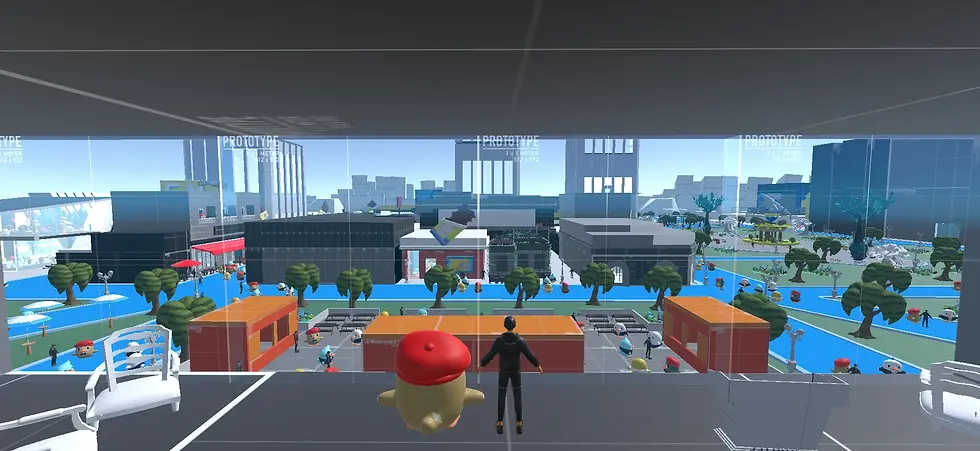
The System Breakdown
Briefing
Design a systematic creation framework for buildings and shops that function as cinematic spatial experiences in VR and traditional game contexts.
The system was built to:
• apply cinematic visual grammar as a design foundation for all interior spaces
• support player circulation, orientation, and agency through spatial layout
• reinforce gameplay flow and narrative beats through composition and lighting
• create environments that read clearly in both VR first-person and traditional third-person cameras
• ensure every building and shop feels alive, purposeful, and internally consistent
The core pillar was cinematic spatial coherence.
Every interior needed to guide the player's eye, support natural movement, and communicate its purpose without signage or instruction.
Design Framework - Bruce Block's Visual Story Applied to Space
The system is grounded in Bruce Block's cinematic grammar, adapted from screen composition to three-dimensional interactive space. Each visual element becomes a spatial design tool.
Space - depth, scale, and volume as player experience.
• deep space draws players forward and creates anticipation
• flat space creates intimacy and focus - used in transaction and display zones
• VR scale validated against human height reference to prevent disorientation
• ceiling height adjusted per zone type - high for arrival, low for compression, medium for browsing
Line - directional cues that guide movement and gaze.
• horizontal lines create calm - used in rest and browsing areas
• vertical lines create aspiration and scale - used at entrances and display walls
• diagonal lines create energy and direction - used in circulation paths and featured product placement
• line conflicts resolved deliberately to avoid visual noise without narrative purpose
Shape - silhouette and form as readability and identity.
• recurring geometric language defines each building type - players learn to recognise function by shape
• irregular shapes signal special or narrative spaces
• shape hierarchy used to distinguish primary, secondary, and tertiary interior zones
Tone - light and shadow as atmosphere and wayfinding.
• bright zones attract player attention - used at featured items and interaction points
• dark zones create depth and mood - used in storage, transition, and atmospheric spaces
• tone contrast guides player movement without UI indicators
• VR lighting validated against comfort thresholds - high contrast avoided in sustained play areas
Colour - temperature and saturation as emotional cue and world logic.
• warm tones used in social, commercial, and welcome zones
• cool tones used in storage, service, and functional areas
• colour temperature shifts signal spatial purpose transitions
• saturation scaled to zone importance - featured displays carry the highest saturation
Movement - rhythm, pacing, and kinetic design.
• circulation paths designed with alternating fast and slow zones
• dwell points placed at natural movement pauses - corners, display clusters, windows
• player movement speed considered in layout - VR movement is slower and more deliberate than traditional games
• rhythm of open and tight spaces creates spatial breathing across the full interior

Flow Structure
Each building and shop is structured as an emotional and functional sequence.
• arrival zone establishes identity and orientation at the threshold
• transition space shifts player mindset from exterior to interior logic
• primary zone delivers core function - browsing, display, interaction
• secondary zones reward deeper exploration and support dwell time
• exit path restores spatial context and prepares the player to re-enter the world
This sequence is consistent across all building types.
Players learn the grammar once and apply it to every space they enter.
Player Flow
Arrival - threshold and first impression:
• entrance framing communicates the building's identity before the player steps inside
• scale transition from exterior to interior is deliberate - height, width, and light all shift
• the first interior sightline is composed to draw the player toward the primary zone
Orientation - spatial reading:
• primary zone is immediately visible from the entrance
• secondary zones are implied but not immediately accessible - reward for further exploration
• player understands function, direction, and invitation within the first few steps
Browsing and interaction - dwell design:
• display layouts follow a rhythm of feature, support, feature - preventing visual fatigue
• interaction points positioned at natural pause locations in the circulation path
• lighting draws the eye to key items without competing with the overall atmosphere
Deeper exploration - secondary space discovery:
• back rooms, upper floors, and side alcoves reward curiosity
• spatial contrast between primary and secondary zones makes discovery feel meaningful
• secondary zones carry additional narrative or lore content
Exit and re-orientation:
• exit path is readable from any point in the interior
• transition back to exterior reintroduces world scale and outdoor atmosphere
• the player leaves with a clear spatial memory of the building
VR Design Considerations
The system was developed with VR as the primary context, requiring additional spatial constraints beyond traditional game design.
• scale validated against 1:1 human reference - oversized spaces cause disorientation in VR
• movement paths designed for room-scale and teleport locomotion patterns
• high-contrast lighting transitions minimised to reduce visual discomfort
• interaction points placed within natural arm reach and comfortable head rotation range
• vertical elements (stairs, shelving, displays) tested against VR comfort thresholds
• sightlines in VR behave differently from screen - depth perception validated in headset, not editor
A space that reads correctly on a monitor can feel wrong in VR.
Every layout decision was tested in headset before being considered resolved.
Environmental Storytelling
Narrative is delivered through spatial design rather than text or exposition.
• material selection communicates the owner's identity, history, and economic status
• wear patterns and object placement suggest how the space has been used
• lighting warmth and colour temperature reflect the emotional tone of the business
• secondary details - shelving organisation, window display choices, clutter levels - build character
• the player understands who owns this space and what it means to them before speaking to anyone
Every shop is a character study expressed through space.
The environment speaks before any NPC does.
Design Shortcomings
Iteration across multiple building types exposed recurring issues:
• early layouts prioritised visual composition over player circulation - beautiful but frustrating to navigate
• VR scale calibration required more iteration than anticipated - what felt right in editor felt wrong in headset
• secondary zones were undervisited - too subtle in their invitation to enter
• lighting contrast in some interiors competed with product readability
• rhythm between fast and slow zones was inconsistent across building types - some felt rushed, others stagnant
The system initially produced spaces that looked cinematic but did not feel cinematic to play through.
Iterative Process
Iteration focused on resolving the gap between visual intent and lived player experience:
• rebuilt circulation paths around observed player movement rather than ideal flow diagrams
• recalibrated VR scale across all building types using in-headset reference sessions
• strengthened secondary zone invitations through lighting, framing, and partial visibility
• separated atmospheric lighting from functional lighting - atmosphere sets mood, function guides action
• introduced consistent rhythm rules across building types - fast entry, slow browse, fast exit
• aligned material and colour choices to a shared world logic document used across all spaces
Changes were driven by observed player behaviour in both VR and flat-screen sessions.
The system was considered resolved only when players moved naturally - without instruction and without confusion.
Delivered Experience
The final system produces buildings and shops that function as spatial stories rather than containers for content.
Players:
• orient immediately on entry - function and direction are readable within the first few steps
• browse naturally without feeling directed or constrained
• discover secondary spaces and treat them as personal finds
• remember specific buildings by atmosphere and layout rather than by name
• move comfortably in VR without disorientation or fatigue
The building is not a backdrop.
It is the first thing the player learns about whoever lives or works inside it.
Environmental Storytelling • Spatial Narrative • World Logic • VR Design • Interior Level Design • Cinematic Composition • World Building


